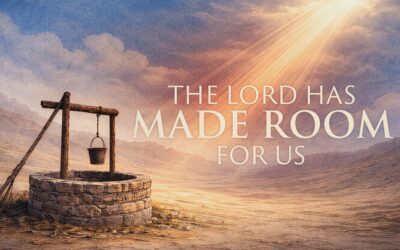

When Faith Becomes Personal: Moving Beyond Inherited Beliefs
In a world where convictions often clash with actions, we find ourselves asking a crucial question: When does faith move from theory to reality? The story of Isaac in Genesis 26 provides a powerful answer, showing us the journey from borrowed faith to personal conviction.
The Danger of Living on Borrowed Faith
Isaac’s story begins with a troubling pattern. Despite being the son of Abraham—one of the greatest men of faith in history—Isaac finds himself repeating his father’s mistakes. When faced with famine, he considers fleeing to Egypt just as Abraham did. When confronted with fear, he lies about his wife being his sister, echoing Abraham’s deception.
Why Do We Repeat Others’ Mistakes?
Isaac had access to all of Abraham’s blessings, knew all of Abraham’s stories, and even re-dug Abraham’s wells, giving them the same names his father had used. Yet he lacked something essential: a personal relationship with God. He was living off his father’s faith rather than developing his own.
This pattern reveals a critical truth: inherited faith can be a good introduction to God, but it makes a poor foundation for life. You can grow up around faith, benefit from faithful parents, and attend church regularly, but eventually you must move beyond yesterday’s wells and dig your own.
God’s Persistent Pursuit
Despite Isaac’s failures, God remained faithful. Twice in Genesis 26, God appeared to Isaac with the same message: “I will be with you.” God promised to bless Isaac, multiply his descendants, and give him the land—not because of Isaac’s faithfulness, but because of God’s covenant with Abraham.
When God Blesses Despite Our Failures
Even after Isaac’s deception about his wife, God blessed him abundantly. The text tells us Isaac sowed seed and reaped a hundredfold harvest. He became so wealthy that the Philistines grew jealous and asked him to leave their territory. Everyone around Isaac could see that God’s hand was upon his life—everyone except Isaac himself.
The Turning Point: Digging Your Own Well
The pivotal moment comes in Genesis 26:25. After God appears to Isaac a second time at Beersheba, Isaac does four significant things:
- He builds an altar (establishing worship)
- He calls on the name of the Lord (developing personal prayer)
- He pitches his tent (making a commitment to stay)
- He digs a well (creating something new)
What Makes This Well Different?
Throughout the chapter, Isaac had been re-digging wells that Abraham had previously dug. But the Hebrew text reveals something crucial about this final well—Isaac uses a different word meaning “to excavate.” This wasn’t another well his father had dug; this was Isaac’s own well, representing his personal faith journey.
Four Principles for Personalizing Your Faith
Don’t Go Down to Egypt
Throughout Scripture, Egypt often represents turning away from God’s plan. When faced with difficulty, Isaac’s first instinct was to flee to Egypt, just as his father had done. But God intervened, saying “Don’t go down to Egypt.”
There may be “Egypts” in your life—places you shouldn’t go, relationships you shouldn’t pursue, or decisions that take you away from God’s best. You’ll never experience God’s best when you’re outside His plan.
Don’t Give In to Fear
Fear drove many of Isaac’s poor decisions. Despite God’s promises of protection and blessing, Isaac acted out of fear rather than faith. God’s repeated message was clear: “Do not fear, for I am with you.”
How often do we let fear overrule faith in our lives? God’s promise of His presence should be stronger than any fear we face.
Don’t Forget God’s Promises
God made multiple promises to Isaac: “I will be with you, I will bless you, I will give you this land.” When Isaac finally began to see God’s faithfulness, he declared, “The Lord has made room for us.”
God has made promises to you too—promises of security, provision, presence, and eternal life through Jesus Christ. Don’t forget what God has promised.
Dig Your Own Well
The most important principle is this: there comes a time when you must make faith personal. You cannot depend forever on someone else’s relationship with God. Whether you had faithful parents or not, you must eventually develop your own personal relationship with Jesus Christ.
When the World Takes Notice
One of the most remarkable aspects of Isaac’s story is that everyone around him recognized God’s blessing on his life before Isaac himself fully understood it. The pagan king Abimelech said, “We have seen plainly that the Lord is with you.”
When God gets hold of your life, a watching world will notice. Your personal faith will become evident to others through God’s work in and through you.
Life Application
This week, examine your faith honestly. Are you living off someone else’s relationship with God, or have you developed your own personal faith? Perhaps you’ve been attending church because of family tradition, or following Christian principles because that’s how you were raised. While these can be good starting points, they’re insufficient for a genuine relationship with God.
It’s time to dig your own well. This means establishing your own patterns of worship, developing a personal prayer life, and making commitments based on your own convictions rather than inherited expectations. Most importantly, it means accepting Jesus Christ as your personal Savior if you haven’t already done so.
Consider these questions as you reflect on your faith journey:
- Am I living off someone else’s faith, or do I have a personal relationship with God?
- What “wells” do I need to dig in my spiritual life—new habits, deeper commitments, or fresh encounters with God?
- Where might fear be preventing me from fully trusting God’s promises?
- How can I move from inherited faith to personal conviction in my daily decisions?
Remember, inherited faith may introduce you to God’s promises, but only personal faith can establish those promises in your life. Only personal faith can give you eternal life and transform how you live. The question isn’t whether you know about God, but whether you know God personally through His son Jesus Christ.