Four Things to Remember When Life Gets Tough
Life has a way of teaching us lessons through both triumph and struggle. After decades of ministry, certain truths become crystal clear – especially during the difficult seasons when we need them most. When marriage gets rough, when church gets hard, when life feels overwhelming, we need to remember some fundamental truths that can anchor our souls.
What Does the Bible Say About Handling Difficult Times?
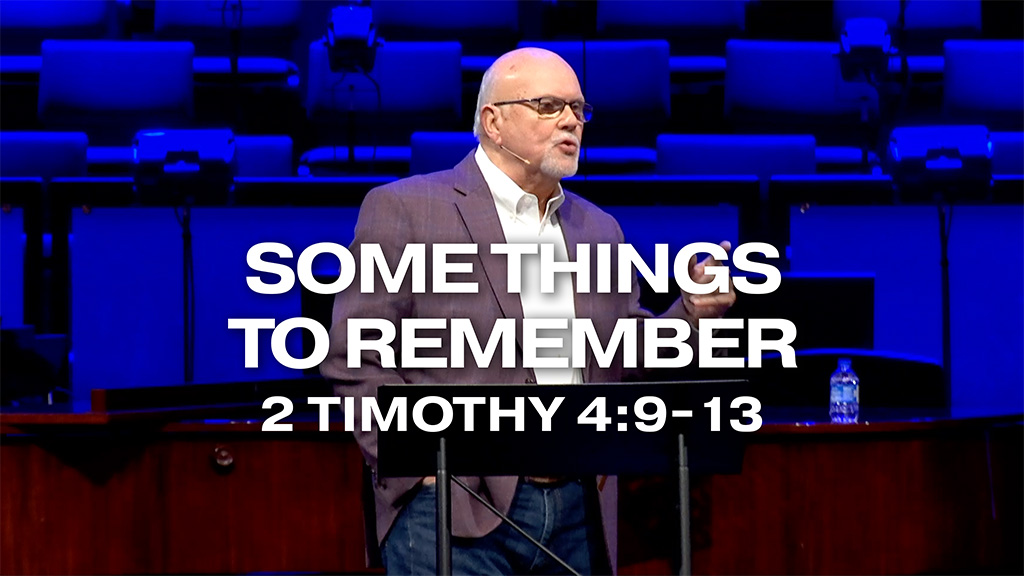
In 2 Timothy 4:9-13, the apostle Paul gives us a glimpse into his personal struggles while facing imprisonment and possible death. Rather than offering platitudes, Paul shares raw, honest insights about the people in his life – both those who disappointed him and those who remained faithful. These verses reveal four crucial truths we must remember, especially when we’re going through our own valleys.
Nobody Ever Gets Beyond Worldliness
The Story of Demas: A Warning About Loving the World
Paul mentions Demas three times in Scripture. First, he calls him “my fellow servant” (Philemon 24). Later, he simply says “Demas” (Colossians 4:14). Finally, he writes, “Demas has deserted me and gone to Thessalonica, in love with this present world” (2 Timothy 4:10).
The progression is telling. Demas didn’t suddenly abandon his faith overnight. He gradually shifted his affections from eternal things to temporal ones. The word “love” here doesn’t describe emotion but value – Demas began placing supreme value on worldly things rather than godly things.
Why Do People Fall in Love with the World?
The temptation to love the world intensifies during difficult times. When life isn’t turning out as expected, when following God seems harder than following the crowd, we can become discouraged, then dazzled by worldly alternatives, and finally decide to pursue them.
The antidote isn’t to constantly criticize the world’s attractions – that rarely works. Instead, we must fall more deeply in love with God. We can’t love both God and the world supremely. The reason many people don’t fall in love with Jesus is simple: they don’t spend enough time with Him.
The Danger of Quitting Before the Finish Line
Demas will forever be remembered as the one who quit before finishing the race. No matter how much good he may have done earlier, his legacy is defined by his departure. Paul, by contrast, could say “I have finished the race” (2 Timothy 4:7).
You may come in last place, but you must finish the race. Success throughout life means nothing if you finish as a failure.
Nobody Ever Gets Beyond Usefulness
Luke: The Faithful Companion
While Demas abandoned Paul, “Luke alone is with me” (2 Timothy 4:11). Luke, the beloved physician and literary genius who wrote both the Gospel of Luke and Acts, stayed when others left. He likely served as Paul’s personal doctor, caring for his physical needs during imprisonment.
Luke understood something crucial: God can use whatever skills and resources you have for His glory. He used his medical training and writing abilities to serve both Paul and the broader church.
Use What You Have Where You Are
The key to usefulness is this principle: Use what you have to do what you can right where you are for the glory of God. Consider Shamgar, who killed 600 Philistines with nothing but an ox goad – a sharpened stick used to prod cattle. Why did he use such a simple weapon? Because that’s all he had. Yet the Bible says “he delivered Israel” (Judges 3:31).
Not everyone gets to preach or sing solos. Many of the most important jobs in God’s kingdom are “non-glory” positions. But God notices every act of service, no matter how small it seems.
Nobody Ever Gets Beyond Forgiveness
John Mark: From Failure to Usefulness
Paul’s request to “get Mark and bring him with you, for he is very useful to me for ministry” (2 Timothy 4:11) tells an incredible story of redemption. This is the same John Mark who had abandoned Paul and Barnabas during their first missionary journey, causing such a sharp disagreement that Paul and Barnabas split up over whether to give him a second chance.
Barnabas wanted to take Mark again; Paul refused, considering him a quitter. They parted ways, with Barnabas taking Mark and Paul choosing Silas. Yet here, at the end of Paul’s life, he specifically requests Mark’s presence because he has become “very useful.”
Failure Doesn’t Have to Be Final
We don’t know exactly how Mark’s restoration happened, but we know it did. Perhaps Paul’s initial rejection, though painful, motivated Mark to prove himself. Sometimes confrontation, though difficult, is more helpful than easy acceptance.
This story reminds us that we serve a God of second chances. Jonah received a second calling after his rebellion. Samson asked for one more opportunity and received it. David pleaded for restoration after his sin and found it.
What If You Feel Beyond Forgiveness?
Maybe you’ve failed spectacularly. Maybe someone has confronted you with your shortcomings, leaving you feeling hopeless. Remember Peter, who denied Jesus three times after boldly declaring his loyalty. When Jesus rose from the dead, He specifically told the women to “tell my disciples and Peter” to meet Him in Galilee. Jesus made sure Peter knew he wasn’t forgotten or unforgiven.
Nobody gets beyond forgiveness – not even you.
Nobody Ever Gets Beyond Humanness
Paul’s Human Needs
Even the great apostle Paul had very human needs. He urgently requested Timothy’s presence: “Do your best to come to me soon” and “come before winter” (2 Timothy 4:9, 21). He asked for his cloak because he was cold, and for his books and parchments because he needed mental stimulation.
Why would God include such mundane details in Scripture? Because the God who inspired the Bible has room in His heart for every need we have – not just the big spiritual ones, but every human need.
We All Need Human Companionship
Some people claim they only need Jesus, but if that were true, Paul must have backslidden in prison since he longed for Timothy’s company. The truth is, God Himself said “it is not good for man to be alone” (Genesis 2:18). We need each other.
Notice that the word “saint” never appears in singular form in the Bible – it’s always “saints” (plural). God never intended us to be lone rangers in the Christian life.
The Real Christian Life
The authentic Christian life isn’t the polished version we see on television or the perpetual smile we sometimes feel pressured to wear at church. Real Christianity is Paul shivering in a cold prison cell, still faithful to God. It’s the wife whose husband has left, the parent whose child has made destructive choices, the person who has lost their job and wonders how to make ends meet.
Being a Christian doesn’t lift you above human frailty or remove life’s struggles. It’s comforting to know that even Paul experienced loneliness, cold, and boredom. These feelings don’t indicate spiritual failure – they indicate humanity.
Life Application
These four truths provide a roadmap for navigating life’s inevitable difficulties. This week, examine your own heart and circumstances through this lens:
Challenge yourself to:
- Evaluate what you’re truly loving most – spend more time with God than with worldly distractions
- Use whatever gifts, skills, or resources you have to serve God right where you are
- Extend forgiveness to others and receive it for yourself, remembering that failure doesn’t have to be final
- Accept your humanity while trusting God to meet all your needs
Questions for reflection:
- Am I spending more time falling in love with the world or with God?
- How can I use what I have to serve God where I am right now?
- Is there someone I need to forgive, or do I need to accept God’s forgiveness for myself?
- Am I trying to be “super-spiritual” instead of honestly bringing my human needs to God?
Remember these truths especially when times get tough. They’re not just nice ideas – they’re lifelines for the storms we all face. Nobody gets beyond worldliness, usefulness, forgiveness, or humanness. And that’s exactly why we need God’s grace every single day.