Why We Should Be Thankful: A Look at Psalm 100
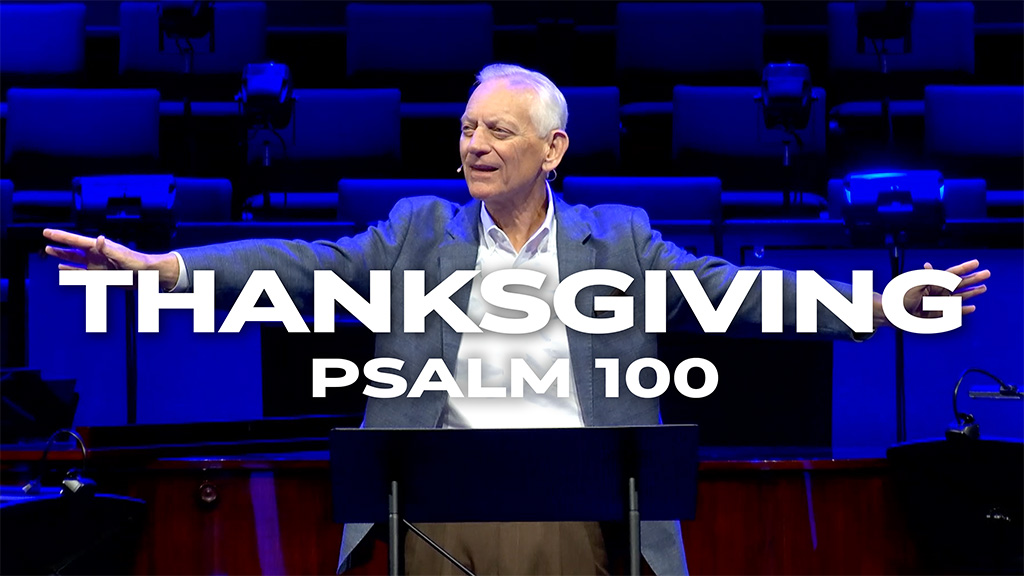
Psalm 100 is one of the most well-known passages in all of Scripture, and for good reason. It is the only psalm with the title “thanksgiving,” and it was used by worshipers approaching the temple as a song of praise to God. Its message is just as relevant today as it was then. If you have ever wondered what it truly means to be a thankful person, or why gratitude matters in the Christian life, this psalm gives us a clear and powerful answer.
What Does Psalm 100 Actually Say?
“Make a joyful shout to the Lord, all you lands! Serve the Lord with gladness; come before His presence with singing. Know that the Lord, He is God; it is He who has made us, and not we ourselves; we are His people and the sheep of His pasture. Enter into His gates with thanksgiving, and into His courts with praise. Be thankful to Him, and bless His holy name. For the Lord is good; His mercy is everlasting, and His truth endures to all generations.” – Psalm 100:1-5
There are seven commands (imperatives) in this psalm: make, serve, come, know, enter, be thankful, and bless. Alongside those commands are seven expressions of worship: a joyful shout, gladness, singing, thanksgiving, praise, thankfulness, and blessing. Together, they paint a picture of what a life of genuine gratitude looks like.
Who Are We Actually Thanking?
It is worth pausing to ask this question. Some people say “thank goodness” or credit luck or fate. But Psalm 100 is clear. We are thanking the true and living God, the God of the Bible. Not a carved image, not a vague cosmic force, but a personal God who has revealed Himself through Scripture.
Not all gods are the same. On a mission trip to India, a well-dressed, highly educated man was seen bowing before a stone carved image in a temple. Intelligence and sincerity do not determine truth. The God of the Bible is distinct. He loved us so much that He sent His Son to die for us. That sets Him apart entirely.
Four Reasons to Be Thankful to God
1. Who God Is: His Character
Verse three begins with a declaration: “Know that the Lord, He is God.” This is about His person, His character. Verse five adds that “the Lord is good.” That goodness is not just about His generosity toward us. It speaks to His holiness, His perfection, His complete sinlessness.
In Isaiah 6:3, angelic beings surround the throne of God crying out, “Holy, holy, holy.” God is high and above anything we can fully comprehend. In our natural state, we cannot approach Him on our own terms. His holiness is that complete.
But His character also includes compassion. Verse five says “His mercy is everlasting.” The Hebrew word used here is hesed, which refers to a covenant love, an unbreakable commitment toward those He loves. Psalm 136 repeats the phrase “His mercy endures forever” in every single verse. God gives us chance after chance because He is merciful, and that mercy never runs out.
His character also includes constancy. “His truth endures to all generations.” James 1:17 tells us that every good and perfect gift comes from the Father of Lights, “in whom there is no variation nor shadow of turning.” God does not change. While culture shifts and celebrity opinions evolve, God’s Word and His nature remain the same. Titus 1:2 even tells us that God cannot lie. His truth is absolute and eternal.
2. What God Has Done: His Power
“It is He who has made us, and not we ourselves.” – Psalm 100:3
God is omnipotent. He is all-powerful and sovereign. Psalm 115:3 says, “Our God is in heaven; He does whatever He pleases.” Before time began, God spoke the universe into existence out of nothing. Genesis 2:7 tells us, “The Lord God formed man from the dust of the earth and breathed into His nostrils the breath of life, and man became a living soul.”
We were not the result of a long chain of random events. We were created at the pinnacle of God’s creative work, made in His image, for relationship with Him. That is worth being thankful for.
3. Whose We Are: His Purpose
“We are His people.” – Psalm 100:3
God’s purpose has always been relationship. But sin broke that relationship. When Adam and Eve chose their own way over God’s, they were immediately separated from Him. And every person since has inherited that same nature. Romans makes it clear: all have sinned and fallen short of the glory of God.
That is exactly why Jesus came. Born of a virgin, He lived the perfect life none of us could live. He died on the cross to pay for our sins. Three days later, He rose from the grave, and that resurrection offers us eternal life and restored relationship with God.
Salvation is not about walking a church aisle or going through a religious ritual. It requires two things: repentance and faith. Repentance means surrendering your life to Jesus, letting Him be Lord. Faith means trusting that what He did on the cross is enough to forgive you and bring you into right standing with God. It is a moment in time when you say, “Jesus, I give all I know of myself to all I know of You.”
Once we are saved, we are not meant to simply sit and soak. Ephesians 2:10 says, “For we are His workmanship, created in Christ Jesus unto good works, which He has before ordained that we should walk in them.” His purpose for us is to live for Him, serve Him, and honor Him with our lives. There is no greater joy than walking in that purpose.
4. How He Cares for Us: His Provision
“We are the sheep of His pasture.” – Psalm 100:3
A shepherd provides for his sheep. God provides for His people. This is not a promise of unlimited material wealth or a formula for getting whatever we want. It is a promise that He meets our genuine needs.
Philippians 4:6-7 and 19 put it this way: “Be anxious for nothing, but in everything by prayer and supplication, with thanksgiving, let your requests be made known to God; and the peace of God, which surpasses all understanding, will guard your hearts and minds through Christ Jesus… And my God shall supply all your need according to His riches in glory by Christ Jesus.”
Life brings real problems. Broken relationships, health struggles, grief, financial pressure. God’s provision is not always a miracle that removes the problem. Sometimes it is the peace that carries you through it. Either way, He provides what we truly need.
Life Application
Psalm 100 is not just a song to be sung. It is a call to live with intentional, active gratitude toward God. This week, take time to do more than feel thankful in a general sense. Sit down and specifically name what you are grateful for, and direct that gratitude toward God in prayer.
Consider gathering with family or friends before a meal this Thanksgiving and actually praying together, naming what God has done. Let it be more than a tradition. Let it be an act of worship.
Ask yourself these questions as you reflect on this passage:
- Have I ever had a genuine moment of repentance and faith, or have I only gone through religious motions?
- Do I truly know the God I am thanking, or is my gratitude directed at a vague idea of a higher power?
- Am I living out the purpose God has for me, or am I letting my old nature run the show?
- When life is hard, do I trust that God’s provision includes His peace, even when circumstances do not change?
God is holy, compassionate, constant, powerful, purposeful, and caring. He is worthy of every expression of thanks we can offer. This week, make that thanksgiving real and personal.